1.27.2012

U.S. economy is healing

The U.S. economy grew at a modest 2.8 percent rate in the final three months of last year, the fastest since spring 2010 and was the third straight quarter that growth has accelerated.


Americans spent more on cars and trucks, and companies built up their stockpiles. But growth in the fourth quarter and all of 2011 was held back by the biggest annual government spending cuts in four decades.


The Commerce Department says the economy grew just 1.7 percent last year, roughly half of the growth in 2010 and the worst since the recession.

1.25.2012

Fed is likely to leave interest rate near zero through 2014

The Federal Reserve said Wednesday that it was likely to leave short-term interest rates at near zero levels at least through late 2014. The Fed is pushing out its easy-monetary policy even further into the future than previously indicated.

An interest-rate forecast is a historic step for the Fed, the latest in a series of moves under Chairman Ben S. Bernanke to increase transparency and communications with the public.

Policymakers at the central bank acknowledged the recent improvements in the economy but said that they expected economic growth over coming quarters to be modest and the unemployment rate, currently 8.5%, to decline only gradually. The Fed committee repeated its concern that strains in global financial markets continue to pose significant downside risks to the economic outlook.

Since August, the Fed had said it was likely to keep the federal funds rate at near zero at least through mid-2013. The federal fund rate broadly influences rates on loans for businesses and consumers.

1.24.2012

Google users has to agree to new privacy policy

Google announced Tuesday that it will require all of its users to agree to a new privacy policy that will integrate user data across 60 Google products including Gmail, YouTube and search. The policy will also encompass information, including location data, collected on mobile devices. Users will not be allowed to opt-out. It will take effect March 1.

According to Google privacy director Alma Whitten said that “if you're signed in, we may combine information you've provided from one service with information from other services. In short, we'll treat you as a single user across all our products, which will mean a simpler, more intuitive Google experience."

11.08.2010

Earrings: the most charming jewelry along woman's face

Earring is the most basic and indispensable piece in the jewelry box of a lady. You may leave the house without a bracelet or a necklace but you are almost always wearing earrings. It is the most charming part along your face. Select the most appropriate earrings that go well with your face is the most important thing.

Most earring styles go with anything, so they won't become wardrobe issues. Earrings are available in some different basic types: studs, drops, chandelier, and hoops.

Studs
Because they're small, stud earrings are easy to wear. They go as easily with a cocktail dress as they do with jeans. You'll find a variety of styles in cultured pearl earrings, diamond earrings and gemstone earrings.

Drops
Drop earrings are made to dangle below their setting. Swaying with movement, they can add an elegant touch. Pearl, diamond, and gemstone drop earrings are available in various settings.

Chandelier

The earring has multi-branches that hang down from the earring base. At the end of branch are some pearls or other gemstones, most are tear or drop shaped.

Hoops
Platinum, 18k gold, or silver hoops give a feminine touch, and precious metals go with anything. For added sparkle, choose a pair with diamonds.

11.01.2010

The Most Popular Gemstones

Most of women love jewelry. Some are partial to certain types of metals like gold or silver. Others love the classic statement that pearls make. Some prefer gemstones while others like opaque gem, which are classified as semi-precious.

It comes as no surprise that the diamond is the most popular gemstone of all time. It is equally popular among both men and women. But, unlike days past, today's woman is very much into the colors of diamonds; particularly pale yellows, blues, and pinks. Men, on the other hand, still prefer the standard clear. The Blue Wittelsbach (on picture) is a 35.56-carat blue diamond is the most expensive diamond ever sold at auction for $24.3 million.


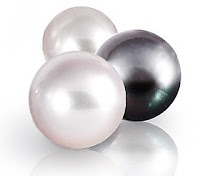
Women, on the whole, also have an affinity for pearl. Pearls have been a symbol of sacred power and the goddess of love for hundreds of years. While whites and creams remain the most popular, black pearls, as well as champagne and cocoa are also becoming highly desired.

Emerald is one of the highest ranks in popularity. The gemstones can be difficult to find in high quality and large stone size. However, perhaps it is that rarity that makes the stone so sought after. Certainly, today's emeralds are among the world's most expensive gemstones; often costing more than diamonds.

Aquamarine is another most popular gemstone, which has become a favorite among today's jewelry designers. Perhaps it is the pale blue green color that appeals to a lot of women. Perhaps it is the fact that it is somewhat rare and can, therefore, be expensive. Aquamarine has supplanted the spot that once belonged solely to the ruby.

Tourmaline belongs to the five most popular gemstones, even though it wasn't even well known a few decades ago. Tourmaline comes in virtually every color of the rainbow and many of them are more vibrant and have more fire than anything else on the market today.

9.30.2010

Accessories a man can add to his wardrobe

As the importance of accessories dawns on men, designers are coming up with many options to accessorize all kind of ensemble. Accessories add the finishing touch to any look and you can make the same outfit look different with different accessories. Men’s jewelry does not need to be costly to give the classy appearance.

Remember as far as men’s jewelry is concerned, less is more. Wearing too much jewelry can actually tarnish your image. Also stick to a single material all over for example wearing a crystal and a garnet could look artificial. Opt for ring, bracelet, cufflink and chain made of a single metal like steel or tungsten or leather to get the uniformity in your overall look and appeal. Choose bold colors, particularly if you are wearing leather jewelry to make a statement.

The most common accessories a man can add to his wardrobe are chain, bracelet, finger ring, and earrings. These accessories are commonly made out of leather, stainless steel or tungsten.

Leather Jewelry

Leather has been popular for centuries, and leather jewelry is very sleek and stylish. Men's leather jewelry is also versatile; many different timeless leather men's jewelry pieces are available.

Leather jewelry imparts a cool casual look to your outfit and is fast gaining popularity. Leather has always been used by men for accessorizing but mostly in the form of wallets and belts. Now designers have come up with wristbands and bracelets in leather which are selling like hot cakes. Intricate details on the leather accessory ensure that they do not go unnoticed. They are embellished with anything ranging from embroidery to stainless steel and even gemstones.

Stainless Steel Jewelry

With designers introducing newer designs and patterns everyday, stainless steel jewelry is becoming the mark of the urban man. A combination of chromium and iron ore results in the rust free stainless steel and jewelry made out of this has a shiny finish, durable and scratch resistant, requires low maintenance and does not cause any allergic reactions. Men’s stainless steel jewelry is available as rings, bracelets, pendants, cufflinks, necklaces and chains.

Tungsten Jewelry

Tungsten has been used to reach the stars and this is what probably lends to the sense of adventure and masculinity that designers seek when designing men’s jewelry. Its popularity as the “forever wedding ring” is increasing day by day. One of the strongest amongst precious metals (when combined with carbon to form tungsten carbide), jewelry made of tungsten is practically invincible. Durable, scratch resistant, light weight, no maintenance are just some of its properties and the prominent one being tungsten retains its shine forever. 

A Swipe on a Phone, You’re Paid

Why can’t everyone accept credit cards? A company called Square is proposing to change that rule for good. 


To become a credit card merchant, you have to buy the card-reading equipment, which costs several hundred dollars. You generally pay a setup fee, and you commit to a one- or two-year contract with the processing company. You pay $15 to $25 a month, and minimum transaction fees of $25 a month, even if you had no sales at all.


The Square Up system, on the other hand, eliminates that stuff. All of it. It makes the barrier to entry into the credit card world so low, there’s virtually nothing to stop you, the little guy, from taking the leap.


First, the equipment: you need an iPhone, iPad, iPod Touch or an Android phone. Why buy a fancy authorizing machine, when you already have a computer in your pocket?


Unfortunately, Apple steadfastly refuses to add a card-swiping slot to the iPhone. So Square provides you with a tiny half-inch reader attachment that snaps into, of all things, your phone’s headphone jack. The reader has a slot where you can swipe a credit card.


(The name Square, of course, refers both to the shape of the little reader and to what it does — as in, “are we square?” Cute.)


The Square plug is free. In other words, not only are you spared the contracts, the minimums and the monthly fees, but your equipment cost is zero. For all Square cares, you can keep your reader in a drawer somewhere and use it once a year.


For each transaction, Square charges you 2.75 percent of the total, plus 15 cents. That’s a lot simpler, and usually cheaper, than actual merchant accounts, where you might pay 3 or 4 percent, depending on the kind of card, plus 30 cents a transaction.


So let’s say someone from Craigslist comes over to buy your old junk. You snap the Square reader into your phone or tablet. You tap in the amount of the purchase; it could be $1 for a yo-yo, $25 for a box of old records or $12,000 for a used car (there’s no maximum amount). You type a description if you like, and maybe even take a photo of what you’re selling.


Now you swipe the customer’s card, which may take you a couple of tries. Your happy customer signs the phone’s touch screen with a finger (a coming software revision will make this step optional). If you like, you can tap in the customer’s e-mail address; the receipt is then sent automatically, complete with a little map showing exactly where the transaction took place.


The software is beautiful and dog-simple. To sign your name, you scrawl with your finger where it says “sign here.” Think you can handle this?


You can add a tip, when that’s appropriate. You can accept and track cash payments. And you can accept credit card payments without the card itself — over the phone, for example. You just need the card number, expiration date and security code, although these transactions cost you more (3.5 percent).


The iPad software is even nicer. It features a “shelf” depicting the kinds of things you sell the most often, with prices included, which is great if you run a small store.


Anyway, that’s the entire thing. Your phone connects to Square, authorizes the purchase, sends the receipt by e-mail and logs the transaction on your personal Square Web page. There, a tidy table reports your income for the day. You can download it as a spreadsheet if you like.


You’ve just accepted payment the way they do it at Apple stores: wirelessly, without a cash register, using a hand-held Internet-connected gizmo. Your biggest problem may be overcoming your customers’ skittishness; people don’t trust what they don’t understand.


Signing up for Square involves supplying your bank routing and account numbers, so Square can deposit your money. Only the first $1,000 of each week’s charges lands in your bank account immediately. Anything over that is reviewed by the company’s auditors; it can take as long as 30 days before you see the rest of the money. That could be a downside if you sell a lot of used cars.


Then again, that’s just for first-timers. The more you use the service without incident, the higher the company will raise that $1,000 threshold. In fact, if you’re willing to share more details about your business with Square upfront, they’ll raise that threshold from the start.


It’s easy to imagine that a concept this disruptive, brilliant and irresistible will take off, but its runway has been bumpy. The initial batches of readers were delayed. Even when they arrived, there were long waiting lists and not enough status reports.


As an antifraud measure, Square originally imposed a $100-a-transaction maximum, making the system far less useful. The original readers were finicky about reading card swipes — and didn’t work with the iPhone 4’s external metal antenna band. (Early Square adopters turned to humiliating workarounds like wedging a scrap of paper between the reader and the phone.)


The company says all of these problems have been fixed. Mass quantities of a redesigned, more reliable, iPhone 4-proof Square reader arrive this week (it’s the one I tested). Within a couple of weeks all backorders will be filled, everybody who got the old one will get the new one automatically, and new orders will be filled promptly.


Let’s hope that’s true. Because the Square system is beautiful, simple and a joy to use. It saves money, red tape, worry and lost sales.


Now let’s just hope more smart people keep asking why. As in, “Why is Wi-Fi free at cheap hotels, but $17 a night at expensive ones?” “Why don’t public sinks have foot pedals?” And “why can’t we just pay for the cable channels we actually want?”